 How-to
Selling a House with a Damaged Roof As-Is
Last Updated: October 23, 2026
Quick Summary
Selling a house with a damaged roof as-is eliminates upfront repair costs but typically means a lower offer or repair credits. You must disclose known roof defects to potential buyers in writing, and traditional buyers often walk away; cash buyers expect damaged properties as-is.
- You must disclose all known roof defects in writing before a purchase agreement is signed or face legal liability.
- Minor roof repairs cost $300-$1,500; full asphalt replacement costs $8,000-$20,000 for an average home.
- Compare net proceeds from both paths: repairing then selling versus selling as-is discounted, accounting for repair costs, holding costs, and commissions.
- Mortgage lenders often require roof repairs before funding, but cash buyers can close on damaged properties without appraisal or insurance conditions.
- As-is sales to cash buyers typically close in 7-21 days, much faster than traditional sales with financing.
Table of Contents
- Can You Sell a House with a Damaged Roof As-Is?
- Roof Damage Disclosure When Selling a House
- Roof Inspection Before Selling a House
- Cost to Repair a Roof Before Selling
- Selling a House As-Is Without Repairs
- Financing and Insurance Constraints for Damaged Roofs
- Documentation and Step-by-Step As-Is Selling Process
- Frequently Asked Questions
Can You Sell a House with a Damaged Roof As-Is?
Yes, you can sell a house with a damaged roof as-is.
At Cash House Buyer WI, we've worked with homeowners facing roof damage who needed to sell quickly without expensive repairs.
Selling a house with a damaged roof as-is eliminates upfront repair costs but typically means a lower offer or repair credits.
Roof Damage Disclosure When Selling a House
You must disclose known roof defects to potential buyers. Failing to disclose material facts exposes you to legal liability, even after closing.
What counts as a material fact? Any defect a reasonable buyer would want to know before purchasing: a missing shingle, active leaks, ceiling water stains, structural damage.
State-Specific Disclosure Requirements
Disclosure laws vary by state. Most require a property condition disclosure form listing known defects; some include roof-specific questions.
Check your state's real estate commission website for exact requirements.
Non-disclosure is serious: buyers can sue for damages, rescind the sale, or file complaints with your state's real estate commission.
What Constitutes a Material Fact
A material fact is any condition that would affect a reasonable buyer's decision or the property's value.
Examples of roof defects that must be disclosed:
- Visible leaks or water stains inside the home
- Missing, cracked, or deteriorated shingles
- Sagging roof lines or structural damage
You don't need to disclose cosmetic issues that don't affect function, like a small discolored patch that doesn't leak. But if you know water is getting in, you must disclose it.
Roof Inspection Before Selling a House
A professional roof inspection before listing documents the roof's actual condition and prevents later disputes.
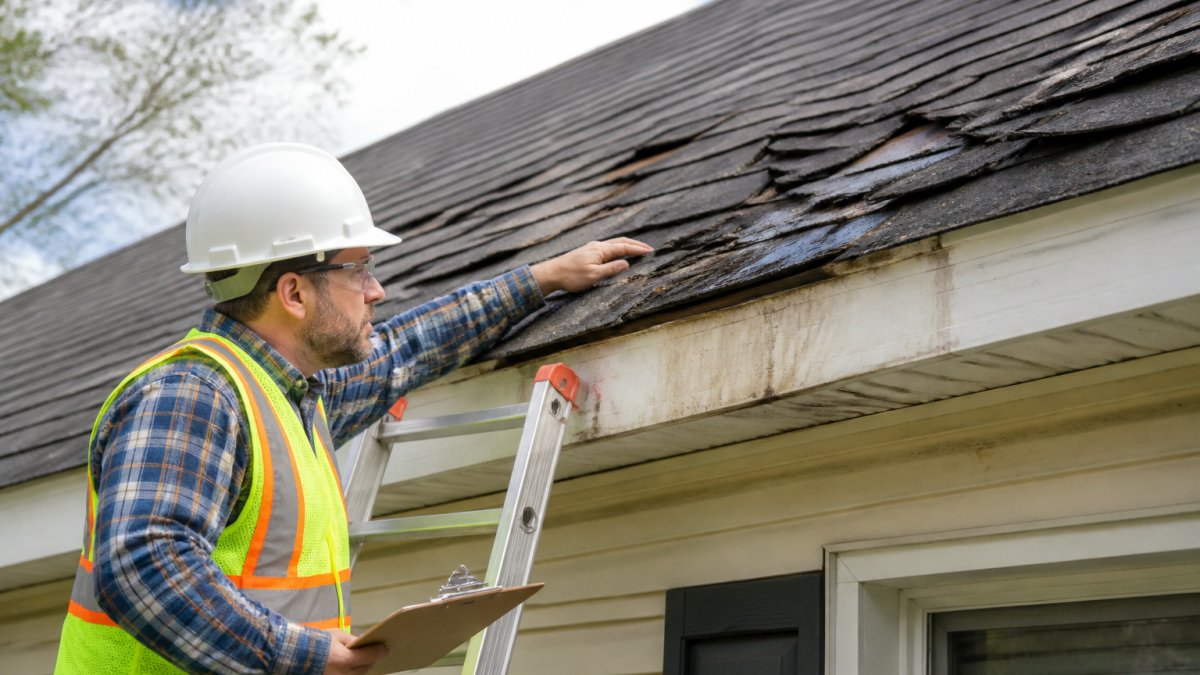
An inspection report gives you three advantages: you know exactly what you're dealing with, you have proof of condition on the inspection date, and you can disclose findings confidently.
What a Professional Inspection Covers
A roof inspector examines shingles, flashing, gutters, vents, and the interior for missing or damaged shingles, deterioration, sagging, improper repairs, and water intrusion.
The inspector walks the roof (or uses binoculars) and checks the attic for leaks, mold, or water stains, documenting everything with photos. The report becomes part of your disclosure package.
Creating a Roof Condition Assessment Checklist
Before listing, document visible roof issues yourself to prepare accurate disclosures.
Use this checklist:
- Check for missing or cracked shingles
- Look for curled or buckling shingles
- Inspect flashing around chimneys and vents
This checklist becomes your disclosure foundation and shows buyers you've been transparent.
Cost to Repair a Roof Before Selling
Roof repair and replacement costs vary by damage severity, roof size, pitch, material, and local labor rates. The real question is whether repairing makes financial sense compared to selling as-is.
Typical Roof Repair and Replacement Cost Ranges
Use these ranges as a starting framework, then get local quotes.
- Minor repair (a few missing shingles, a small patch, resealing flashing): roughly $300-$1,500
- Moderate repair (section replacement, valley repair, chimney flashing rebuild): roughly $1,500-$5,000
- Full tear-off and replacement, asphalt shingles: commonly $8,000-$20,000 for an average single-family home, with larger or steeper roofs exceeding that
A licensed roofing contractor's written estimate is the only number you should rely on for your property.
A Transparent Net-Proceeds Comparison Framework
Build a side-by-side comparison of your two paths. Compare net proceeds, what you actually walk away with, not the headline sale price.
Path A: Repair or replace, then sell traditionally
- Repair or replacement cost: use the contractor's written estimate
- Pre-sale holding costs: mortgage payments, taxes, insurance, utilities for the additional months the project and listing take
- Agent commission: commonly 5%-6% of the sale price
Path B: Sell as-is without repairs
- Repair cost: $0
- Holding costs: often lower because as-is sales to cash buyers can close in weeks rather than months
- Agent commission: $0 if you sell directly to a cash buyer; 5%-6% if you list with an agent
How to use the framework: Plug in your own numbers. The path with the higher net proceeds, not the higher sale price, is the better financial decision.
When Repairing Makes Sense
Repairing or replacing the roof before listing can be the better choice when:
- The damage is minor and a modest repair restores full marketability
- You have cash on hand and time to manage contractors
- Your local market strongly favors move-in-ready homes and discounts for damaged roofs are steep
When Selling As-Is Makes Sense
Selling as-is tends to win when:
- The roof needs full replacement and you cannot fund it
- You need to close quickly because of a job move, foreclosure risk, or estate settlement
- The discount buyers demand is smaller than the all-in cost of repair plus holding costs plus commissions
Run both paths through the framework before deciding. The answer depends on your numbers, not a rule of thumb.
Roof repair and replacement costs vary widely depending on damage severity and scope.
| Repair Type | Cost Range | Notes |
|---|---|---|
| Minor repair | $300-$1,500 | Missing shingles, small patch, flashing resealing |
| Moderate repair | $1,500-$5,000 | Section replacement, valley repair, chimney flashing |
| Full replacement, asphalt shingles | $8,000-$20,000 | Average single-family home; larger or steeper roofs exceed this |
| Full replacement, metal or tile | $15,000-$40,000+ | Depends on material and complexity |
Selling a House As-Is Without Repairs
Selling as-is means the buyer accepts the property in its current condition, makes no repairs, and takes on all responsibility for the roof and other defects.
This approach works best with cash buyers and investors. Traditional buyers with financing rarely accept roof damage without repair agreements or price credits.
How Roof Damage Affects Buyer Interest and Offers
Roof damage dramatically reduces buyer interest. Most traditional buyers walk away; those who stay demand significant price reductions or repair credits at closing.
Many mortgage lenders won't finance a property with a roof in poor condition, it fails the appraisal or the lender requires repairs before funding.
Cash buyers have no lender restrictions. They can close on damaged properties quickly.
Price Reduction and Repair Credit Negotiations
If you do attract traditional buyers, expect negotiations over the roof.
Buyers typically request one of three things:
- Price reduction, They want the purchase price lowered by the estimated repair cost plus a buffer for risk
- Repair credit at closing, A dollar amount credited to the buyer at closing to cover repairs
- Seller-funded repairs, The seller hires and pays for repairs before closing
Price reductions are most common. A buyer might ask for 15-25% off market value if the roof needs replacement.
Negotiate based on repair estimates. If estimates run $8,000-$12,000 for roof work, expect buyers to ask for a $10,000-$15,000 price reduction to cover repairs plus their risk.
Financing and Insurance Constraints for Damaged Roofs
Roof damage affects more than buyer interest. It shapes which buyers can actually close, because both mortgage lending and homeowners insurance underwrite the roof. Understanding these constraints helps you predict which offers are real and which will fall apart late in the transaction.
How Appraisals and Loan Conditions Treat a Bad Roof
A home appraisal and a home inspection are different things, and sellers often confuse them.
- Home inspection: A buyer-hired evaluation of the home's condition. Findings usually drive repair requests or credits.
- Appraisal: A lender-hired valuation used to justify the loan amount. The appraiser notes condition issues, and the lender may attach conditions that must be met before closing.
A common pattern is for the appraiser to flag a roof with visible damage, missing shingles, or signs of active leakage and recommend further inspection by a roofing professional. The lender can then require repairs before funding, or hold back funds in escrow until work is completed.
Loan-Type Differences
Not all loans treat a damaged roof the same way:
- Conventional loans: Often the strictest on roof condition, especially when the appraisal notes active leaks or structural concerns.
- FHA loans: The property must meet minimum property standards, and a roof with active leaks or remaining useful life below a threshold can trigger repair requirements.
- VA loans: Similar minimum property requirements; a roof that does not have reasonable remaining life may need repair before closing.
If you plan to sell to a financed buyer, expect the roof to be examined by both the buyer's inspector and the lender's appraiser. Disclose the condition early so the buyer can choose a loan program that fits the property, or walk away before you have invested months in the deal.
Homeowners Insurance Underwriting
Insurance is the second gate. A buyer who cannot insure the home usually cannot close a financed purchase, because lenders require proof of insurance at closing.
Key mechanisms to understand:
- Underwriting review: Insurers inspect or review the roof's age and condition. A roof near or past the end of its expected service life, or one with visible damage, may be declined, surcharged, or accepted only with a repair commitment.
- Actual cash value vs. replacement cost: Some policies pay only depreciated value for roof claims. Buyers may accept this on an older roof but factor the reduced coverage into their offer.
- Claims history: Prior roof or water-damage claims can affect insurability and premiums, and buyers may ask about them.
What This Means for Your Sale Strategy
- If your roof would likely fail an appraisal condition or an insurance underwriting review, market the home to cash buyers and investors who do not depend on either.
- If you want to reach financed buyers, get a professional roof inspection first and be ready to offer a repair credit or price reduction sized to the actual repair estimate.
- Disclose roof condition and any claims history upfront. Buyers who understand the constraints early are far less likely to renegotiate or cancel after the appraisal.
Understanding these financing and insurance mechanics lets you target the buyer pool that can actually close, and avoid weeks lost to a transaction that was never going to fund.
Documentation and Step-by-Step As-Is Selling Process
Selling as-is requires careful documentation. Clear records protect you from legal disputes later.
What Sellers Should Provide
Gather and organize these documents before listing:
- Roof inspection report, Professional inspection with photos
- Repair estimates, 2-3 quotes from licensed contractors
- Property condition disclosure, Completed state-required form listing all known defects
Provide these to all buyers upfront. Transparency builds trust and reduces disputes.
Timeline for As-Is Sales
As-is sales typically close faster than traditional sales because there's no inspection contingency or repair negotiation.
Typical timeline:
- Day 1-2: Cash buyer inspects property and makes offer
- Day 3-7: Offer accepted, paperwork begins
- Day 14-21: Closing (cash buyers often close in 7-14 days)
Traditional buyers take longer because of financing, appraisals, and repair negotiations.
Selling a house with a damaged roof as-is is realistic and often profitable compared to making expensive repairs.
Cash House Buyer WI helps homeowners sell damaged properties quickly without repairs or agent commissions.
Frequently Asked Questions
Can I sell a house with a damaged roof as-is?
Yes, you can sell a house with a damaged roof as-is, but you must disclose the damage to buyers. Many homeowners choose this route to avoid repair costs and speed up the sale. Cash buyers often purchase damaged properties without requiring repairs. Traditional financing buyers may face mortgage approval challenges, and their lenders typically require roof inspections. An as-is sale means the buyer accepts the property in its current condition, though the damage will likely reduce your asking price or result in repair credits.
What roof damage disclosure requirements apply when selling a house?
Disclosure laws vary by state but generally require sellers to reveal known material defects, including roof damage, water leaks, and structural issues. Most states mandate written disclosure forms completed before listing. Failing to disclose known roof damage can expose you to legal liability and contract rescission even after closing. Document all roof damage with photos and inspection reports, and provide these to your real estate agent or buyer. Consult your state's real estate commission guidelines or a local attorney to confirm specific requirements in your jurisdiction.
How much does roof repair cost before selling?
Roof repair costs range widely depending on damage severity, roof size, and materials. Minor repairs like replacing missing shingles might cost $300-$1,500. Partial repairs for localized damage typically run $1,500-$5,000. Full roof replacement can exceed $10,000-$25,000 or more. Before investing in repairs, compare the repair cost against the price reduction buyers might accept for an as-is sale. Many sellers find that the net proceeds after repair costs are similar to accepting a lower offer on a damaged property, making as-is sales more attractive financially.
Will buyers be able to get a mortgage on a house with a damaged roof?
Mortgage lenders typically require a roof inspection as part of the appraisal process. Significant damage, missing shingles, or active leaks can cause lenders to deny financing or require repairs before closing. FHA loans have strict roof requirements and may refuse to finance homes with roofs nearing end-of-life. Cash buyers bypass this issue entirely, but traditional buyers may struggle to secure financing. If you're selling to a conventional buyer, understand that roof damage could delay closing or require you to make repairs or offer a credit to cover buyer repair costs.